Fitting guide
Illustrated Fitting Guide: the Masalo Cuff Step by Step
This fitting guide shows every step as an illustration – from sliding the cuff on to straightening your arm. Take a little time the first time you do it, as the exact fit determines how much relief the cuff can provide.
Contents
Key points at a glance
- Close the forearm cuff halfway between the hand and the elbow.
- Align the marker dot roughly centrally with the crook of the elbow.
- With your arm bent, adjust the upper-arm strap just above the elbow.
- Fitted correctly: straightening only with some effort, plus a visible bulge.
Step by step: putting on the Masalo Cuff
Open the fasteners and slide the cuff on
Open both hook-and-loop fasteners without pulling the straps out of the plastic loops. Slide the cuff over your hand.
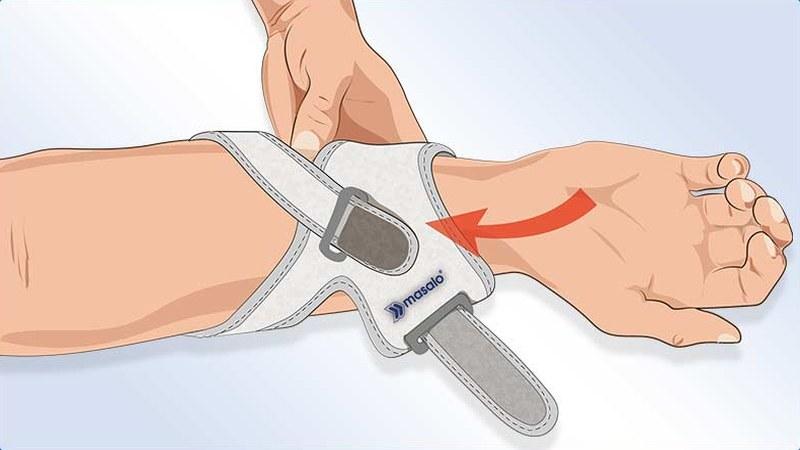
Close the forearm cuff
Slide the cuff to roughly the middle of your forearm and close the hook-and-loop fastener so that it fits snugly.
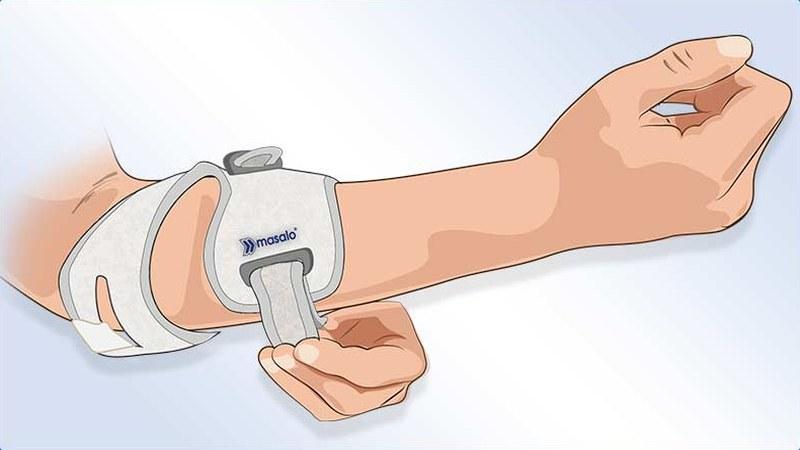
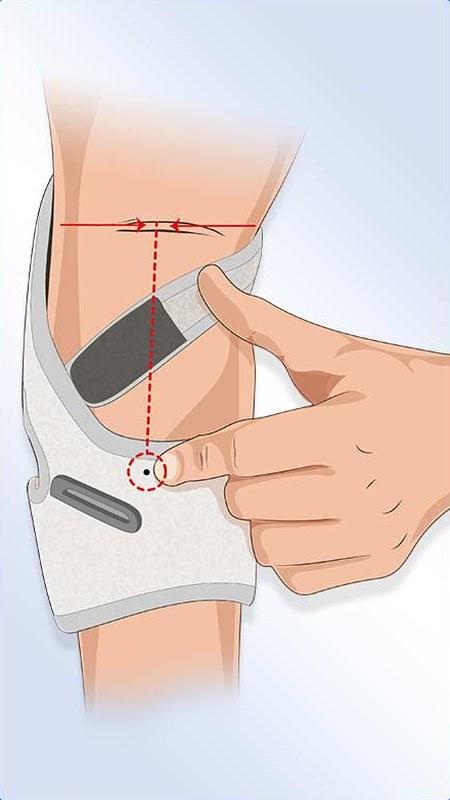
Align the dot with the crook of the elbow
The small dot on the cuff sits roughly centrally in line with the crook of the elbow.
Slide the upper-arm strap over the elbow
Once the forearm cuff is in the right position, slide the upper-arm strap over your elbow onto your upper arm.
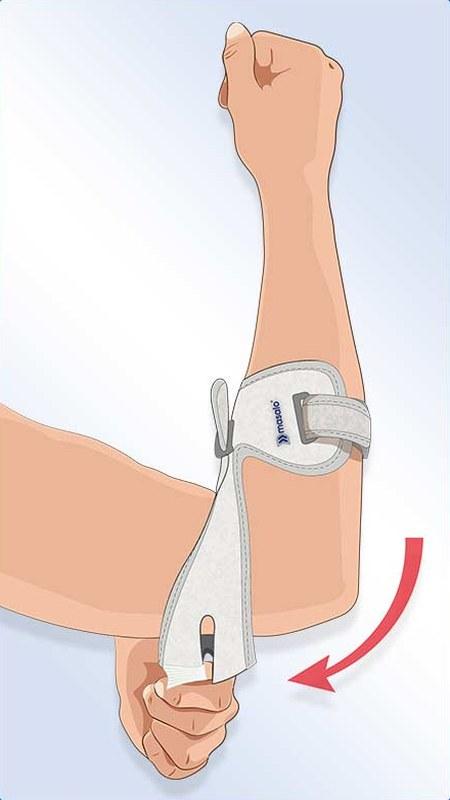
Bend your arm
Bend your arm. The upper-arm strap lies just above the elbow bone, not further up towards the shoulder.
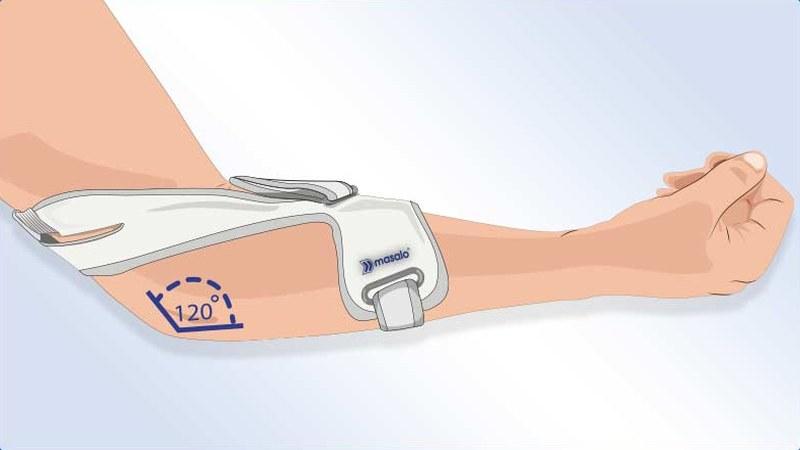
Adjust the upper-arm strap
In this position, adjust the strap so that it fits snugly against your upper arm while your arm is bent, and close the hook-and-loop fastener.
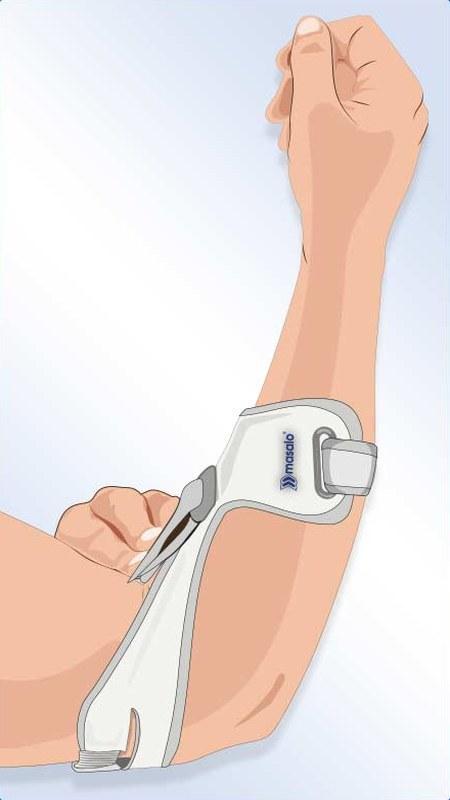
Straighten your arm
Straighten your arm: you will now feel the counter-traction set in. It should only be possible to straighten your arm with some effort.
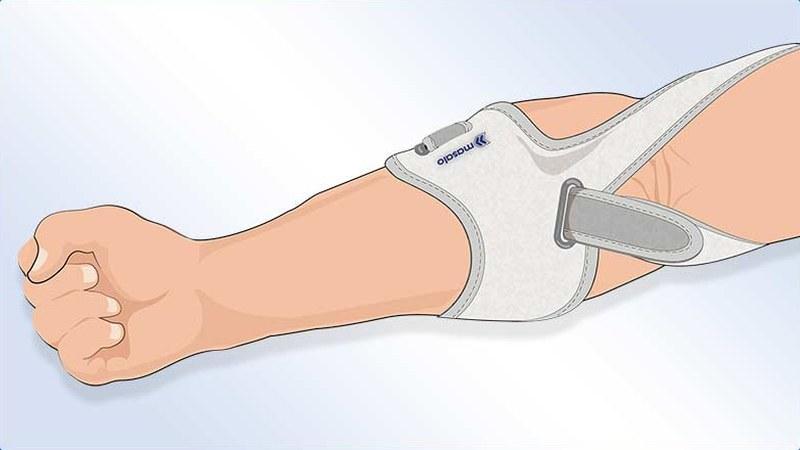
Check the fit by the bulge
A bulge appears between the forearm cuff and the elbow. This shows you that the area of the tendon attachments is being relieved.
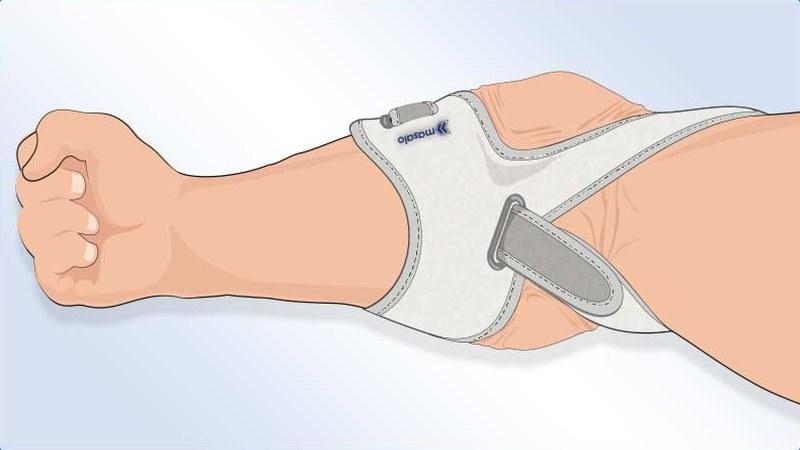
Caution: not too close to the crook of the elbow
 ✕
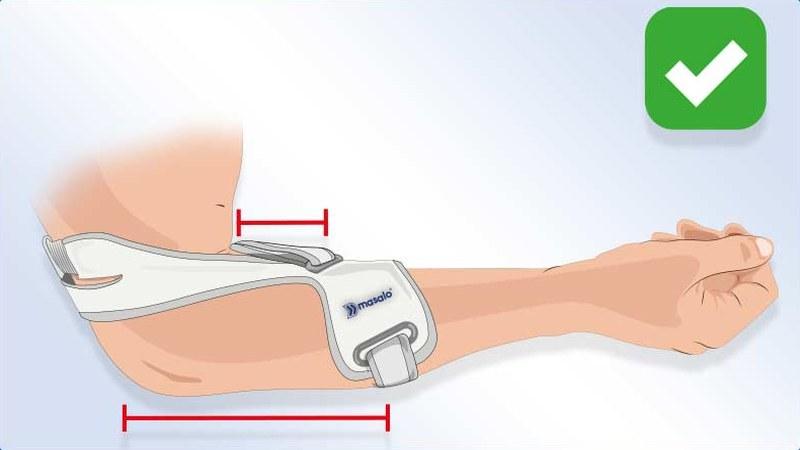 ✓
We show you other typical mistakes and how to fix them under Fitting the Masalo Cuff correctly. For tennis elbow, you can also check that everything is right with the function test.
Adapting the setting to your everyday life
The tighter the upper-arm strap, the stronger the counter-traction. For activities with your arm bent, such as at the computer, it can be a little tighter; otherwise, loosen it as needed.
Important: the cuff does not immobilise your arm. Move it quite normally – the counter-traction should only be noticeable when you straighten your arm and under strain. Find out more in our Tips & Tricks.