Use
Everyday Tips for Wearing the Masalo Cuff
The Masalo Cuff can be adapted to any situation: a little tighter for work and sport, a little looser at night. These tips will help you find the right setting for you more quickly.
Contents
Key points at a glance
- At first, set it a little tighter and avoid fully straightening your arm for 2–4 days.
- In the first 1–2 weeks, wear it day and night if possible.
- Set the strap tighter for work and sport and a little looser at night.
- If it presses on the painful spot: rotate, reposition or readjust it.
- Keep your arm moving rather than resting it – and listen to your body.
The first few days: set it a little tighter
The tighter the upper-arm strap, the greater the counter-traction and the more the tendon attachments are intended to be relieved. A slightly tighter setting is therefore advisable at the beginning. For the first two to four days, avoid straightening your arm fully as far as your daily routine allows.
However, the cuff is not meant to immobilise your arm. Use it as normally as possible and listen to your body's signals.
At work
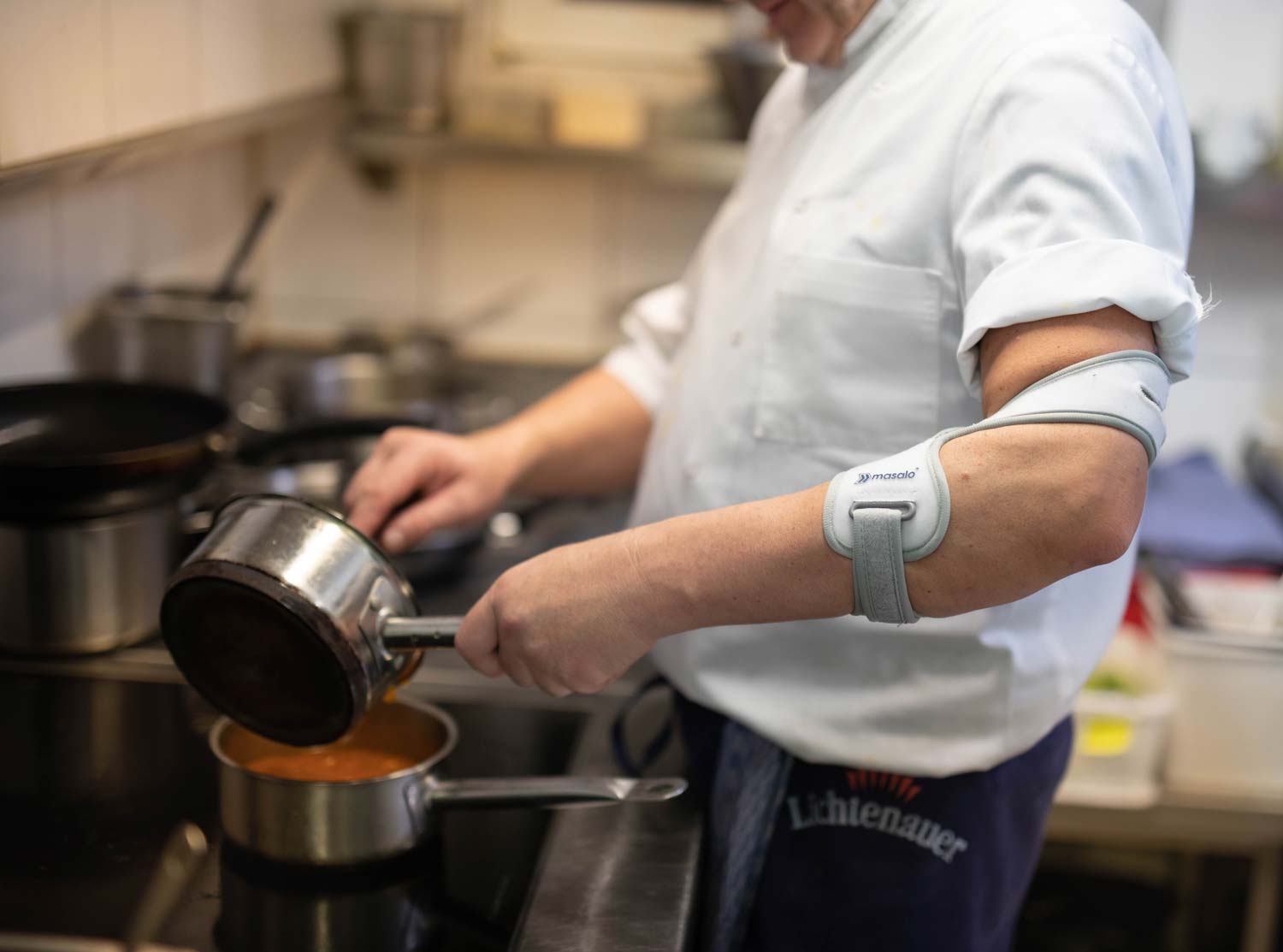
For physical work or activities with your arm bent, such as at the computer, the upper-arm strap can be set a little tighter. Very tight settings are only intended for the duration of the strain – loosen the strap again afterwards. The cuff can also be worn under a shirt or work clothing.
During sport
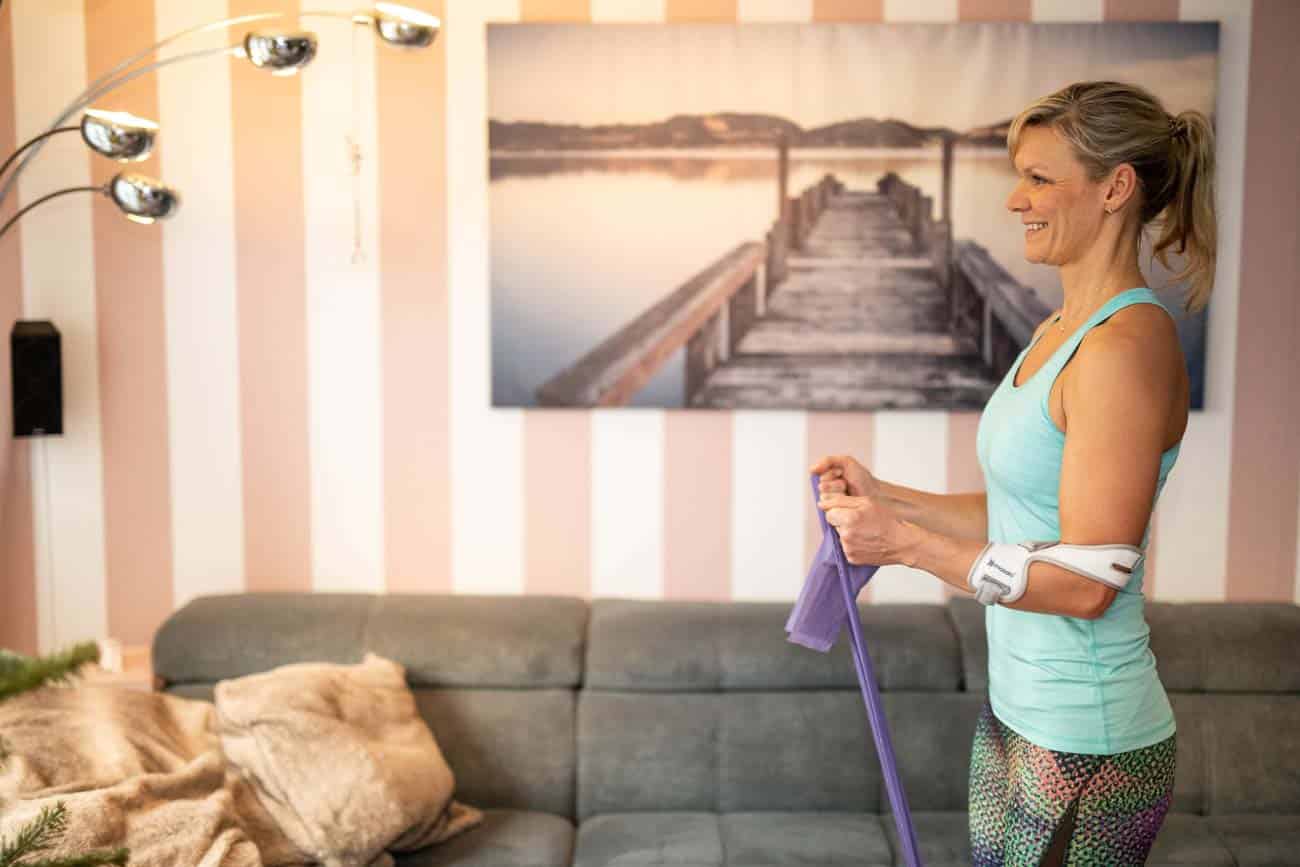
If the cuff fits well, you can feel the counter-traction and you are managing your everyday life normally again, then in our view there is nothing to stop you returning to training. Set the strap a little tighter for this. Start with light weights and more repetitions, train slowly and without momentum, and avoid fully straightening your arm at first.
You can also wear the cuff while swimming and doing water sports. You can read more about training in our guide Sport despite epicondylitis.
At night
While we sleep, our movements are uncontrolled: we turn over or prop ourselves up on our arm. That is why we recommend also wearing the cuff at night, if possible, for the first one to two weeks. The upper-arm strap can then be a little looser – but the counter-traction should still be noticeable when you straighten your arm.

Pressing or slipping? How to readjust it
If you would like more relief or the cuff presses on the painful spot, try one or more of these adjustments:
- Rotate: turn the forearm cuff a little further towards the outer or inner side.
- Reposition: move the forearm cuff slightly towards the hand or the elbow – but it should stay roughly in the middle.
- Readjust: set the upper-arm strap tighter or looser.
- If the area is sensitive to touch: position the strap a little higher and tighter, then move it back after two to four days.
If the strap slips, check the silicone strip inside the upper-arm strap – find out more on the page about how the cuff is constructed. Typical fitting mistakes are shown in the right/wrong pictures.
Important
If you notice circulation problems under normal strain, readjust the cuff. If something does not feel right, take it off for the time being and get in touch with us: +49 2641 8970500 or info@tp-ortho.de.
Don't stop wearing it too soon
Wear the cuff until your symptoms have subsided if possible, and after that, feel free to keep wearing it preventively for strenuous activities and during sport. Don't put it completely out of reach: if you notice the symptoms starting again, it is best to put it back on straight away. You can find out how to keep the cuff clean in our care instructions.