Guide
Sport with Tennis Elbow: Tips for Strength Training, Tennis, Golf and Climbing
Whether you can do sport with tennis elbow depends on the diagnosis and how severe your symptoms are. If you start training again, you should adjust the load, technique and equipment – in different ways depending on the sport.
4 min readUpdated on November 10, 2026
Contents
- 01Can you do sport with tennis elbow?
- 02Basic rules for getting back into training
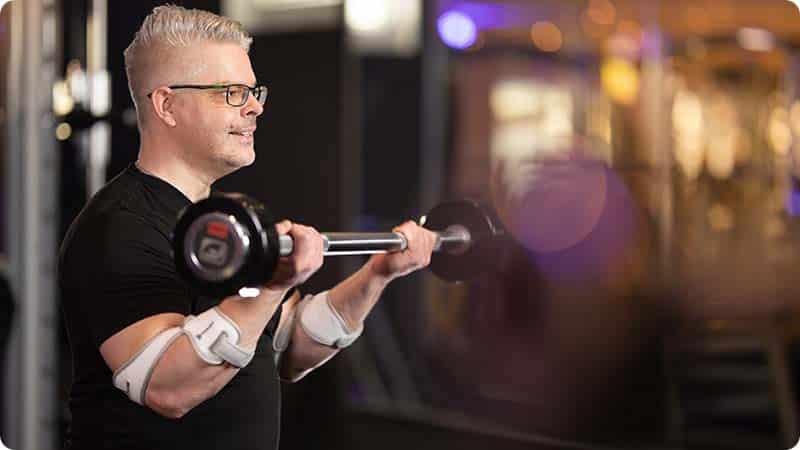
- 03Strength training: these exercises put particular strain on the tendons
- 04Tennis, squash and table tennis
- 05Golf
- 06Climbing and bouldering
- 07When should you see a doctor?
- 08The Masalo Cuff during sport
- 09Frequently asked questions
Key points at a glance
- Get a medical assessment first, then return to training gradually.
- Less weight, more repetitions, slow movements rather than momentum.
- At first, don't fully straighten your arm under load.
- In tennis, golf and climbing, it is worth looking at technique, grip and equipment.
- If the pain gets worse: reduce the load or take a break.
Can you do sport with tennis elbow?
Have elbow pain checked by a doctor first. Only an examination can show whether you actually have tennis elbow, golfer's elbow or another injury. Once the diagnosis is confirmed and you are coping well with everyday life again, a gradual return is often possible – ideally in consultation with your doctor or physiotherapist.
Athletes are frequently affected because many factors come together in training: numerous repetitions, high forces and deliberately applied training stimuli. Often, however, the irritation actually develops at work or in the home, and training then makes it worse.
Basic rules for getting back into training
- Less weight, more repetitions: start with light weights and simple exercises
- Don't fully straighten your arm: at first, avoid full extension under load
- Slowly rather than with momentum: perform each repetition in a controlled manner and take a few seconds for each direction of movement
- Stabilise your wrists: use a wrist support or fitness gloves with wrist support
- Watch out for warning signs: if the pain increases during or after training, reduce the load or take a break
- Only stretch once symptoms have subsided: do not stretch while your arm is acutely painful – a gentle warm-up, on the other hand, makes sense
Strength training: these exercises put particular strain on the tendons
| Tennis elbow (outer side) | Golfer's elbow (inner side) | |
|---|---|---|
| Typical exercises | Biceps curls, especially with a straight barbell; bench press, chest press | Lat pulldowns, pull-ups, chest flys, triceps exercises with angled grips on the cable machine |
| Why they cause strain | unfavourable angle, high load in the extension phase or when holding | strong pull on the inner side of the elbow |
There is usually no single typical trigger. Review your choice of exercises and grip variations and, if necessary, ask your trainer for advice.
Tennis, squash and table tennis
Racket sports put strain on the tendon attachments with every stroke – in table tennis, mainly strokes played from the wrist. Get advice on grip size, stringing and stroke technique, and increase playing time and intensity gradually after a break.
Golf
Golf gave golfer's elbow its name, but it can also put strain on the outer side of the elbow. Have a golf coach check your swing technique and grip, and hold the club loosely rather than tensely. After a break, start with short sessions.
Climbing and bouldering
In climbing, your grip bears a large part of your body weight – a high load, especially for the flexor muscles. Hanging for long periods, for example from a bar, also pulls hard on the tendon attachments. Warm up your fingers and forearms thoroughly, increase difficulty and volume gradually and plan in enough rest days.
The same applies to mountain biking with its jolts and to throwing and ball sports such as javelin, handball or volleyball.
When should you see a doctor?
- Before continuing or increasing your training after elbow pain
- If the symptoms started after a fall or a sudden overload
- If the elbow is swollen, red or warm
- If you notice tingling, numbness or loss of strength in your hand
- If the pain persists or gets worse despite a break from training
The Masalo Cuff during sport
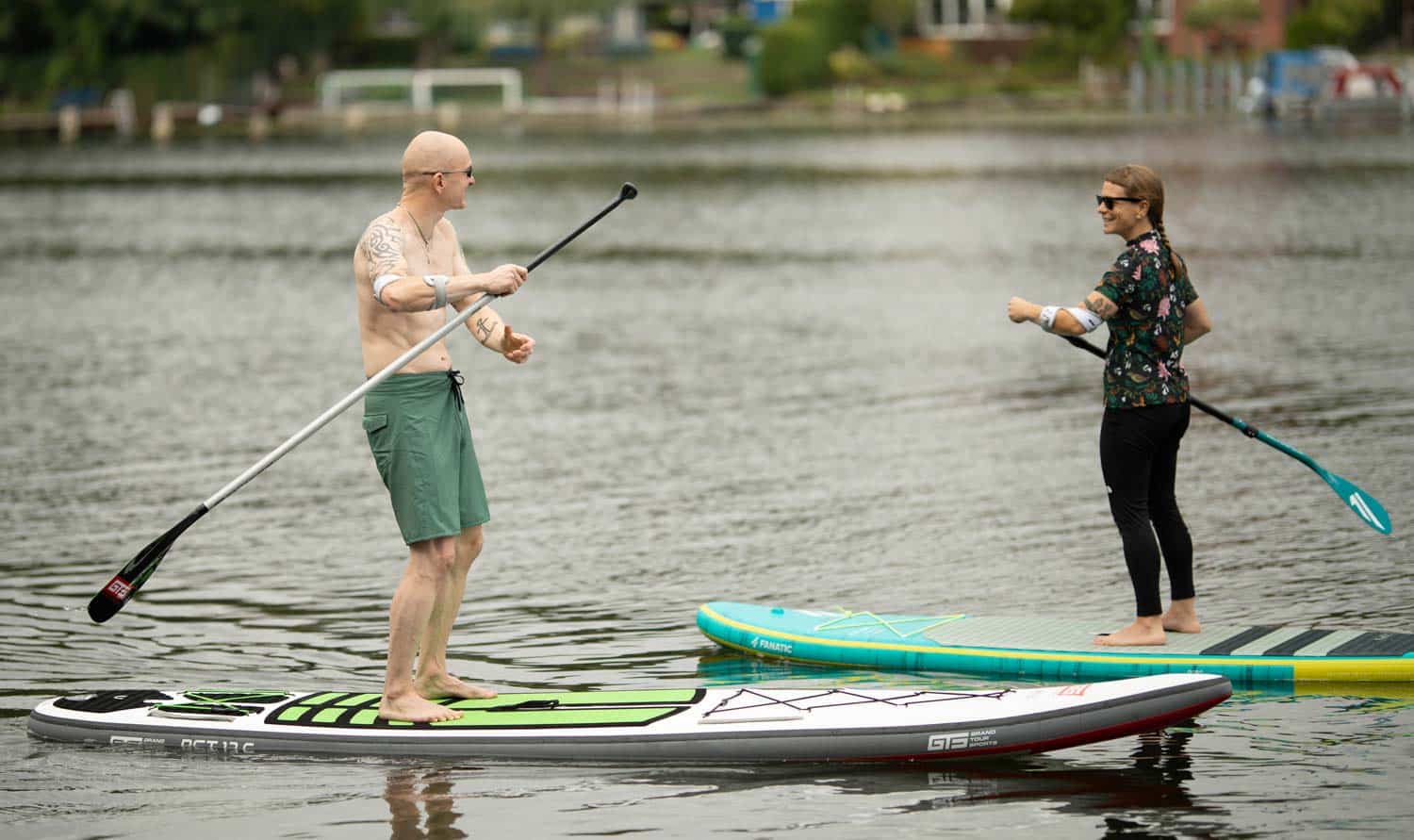
The Masalo Cuff MED was developed to relieve the tendon attachments at the elbow by means of counter-traction – for both tennis elbow and golfer's elbow. Your arm remains mobile. You set the upper-arm strap tighter or looser depending on the activity, and an inner element with silicone nubs is designed to stop it from slipping.
The cuff is washable and can also be worn while swimming and doing water sports such as stand-up paddleboarding. For it to work as intended, it must be fitted correctly – the fitting guide shows you how. You will find more tips for everyday life under What helps with tennis elbow?