How it works
The Counter-Traction Principle: How the Masalo Cuff Works for Tennis and Golfer's Elbow
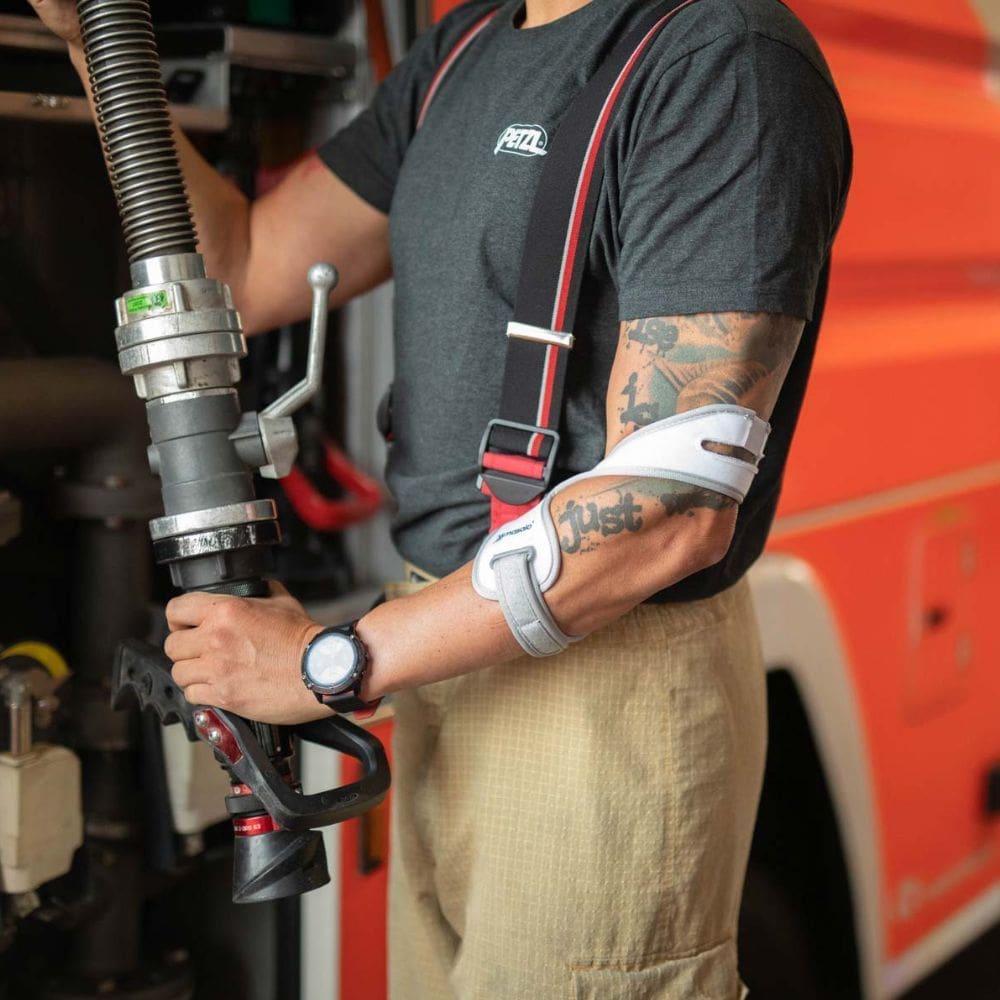
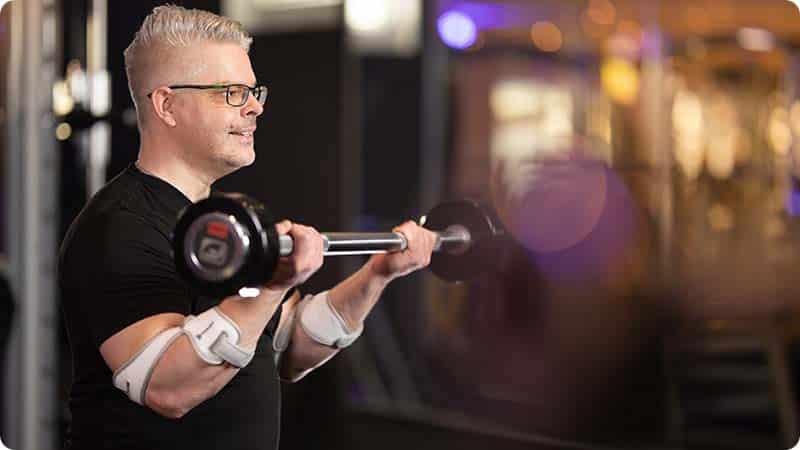
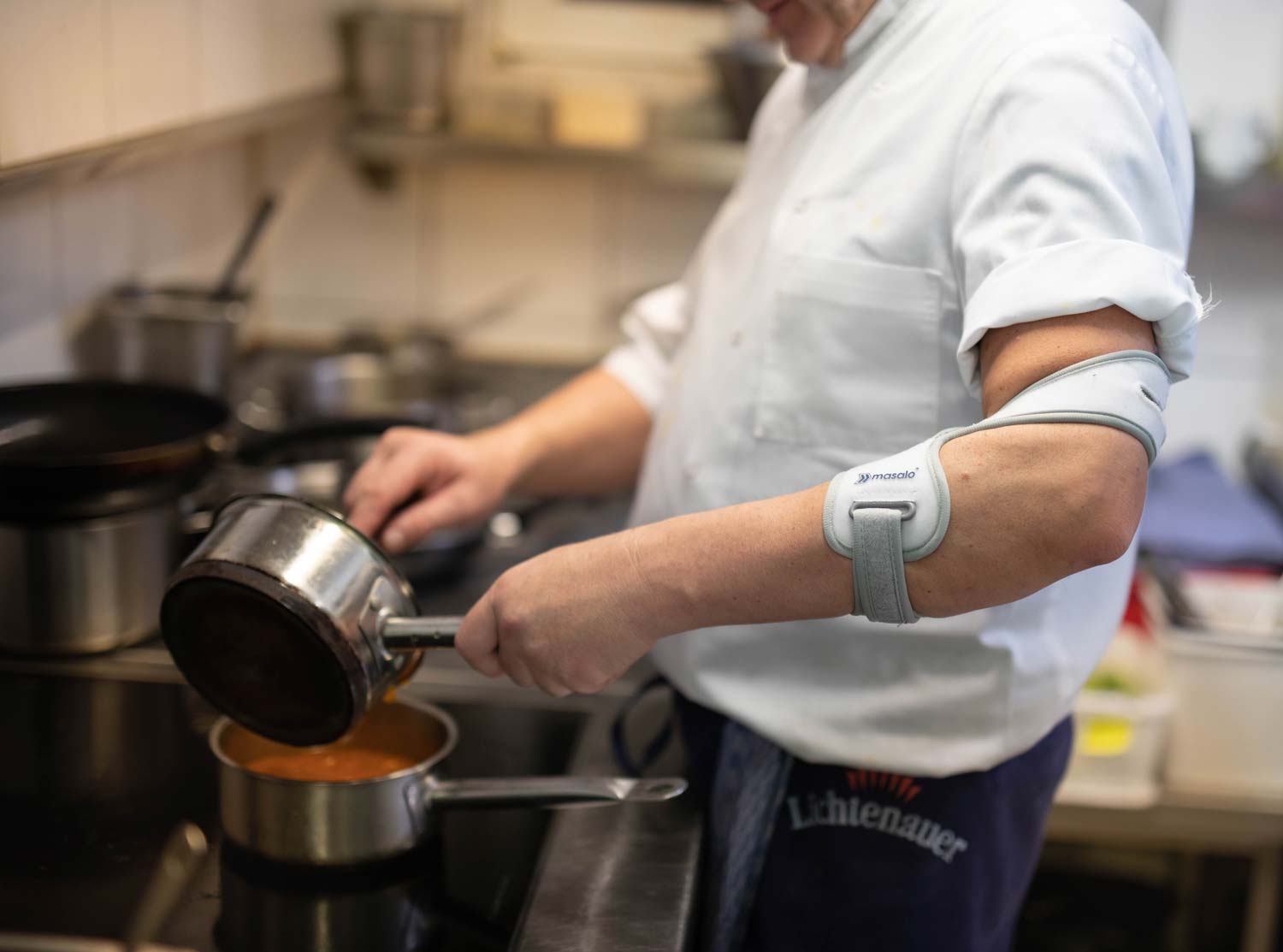
The Masalo Cuff MED works with counter-traction rather than pressure: it is designed to absorb the pulling forces that act on the irritated tendon attachments in tennis elbow and golfer's elbow. Your arm remains mobile throughout.
Contents
Key points at a glance
- Pain under strain is caused by the pulling forces of the forearm muscles at the tendon attachments.
- The cuff creates counter-traction and redirects these forces to the upper-arm strap.
- No compression: circulation is maintained, and it can also be worn at night.
- The counter-traction comes into play mainly when you straighten your arm or put strain on it.
- A correct fit with the right adjustment is essential.
Where does the pain in tennis elbow come from?
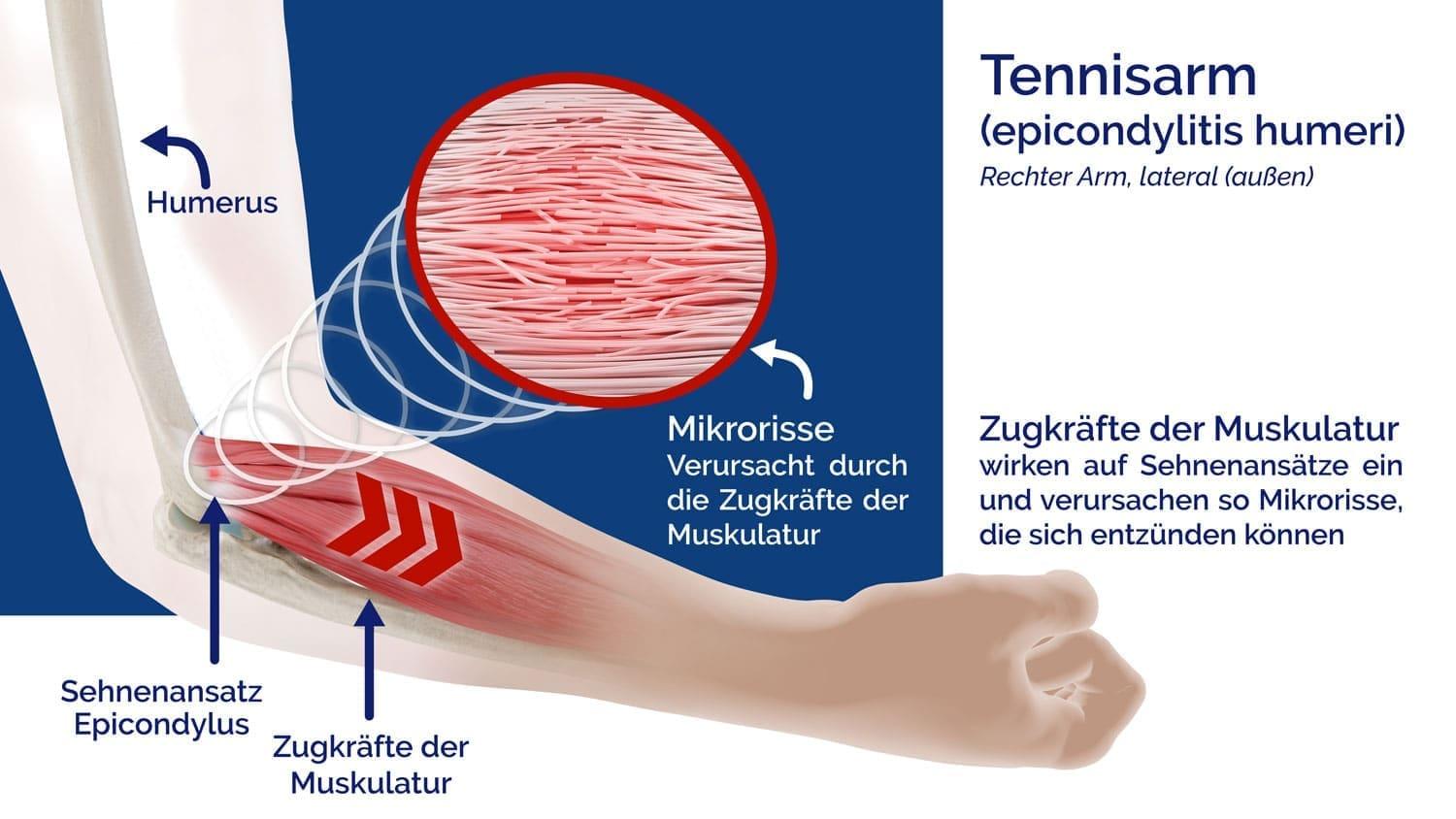
The tendons of the forearm muscles attach at the epicondyles, small bony prominences at the elbow. Every time you grip, lift or type, these muscles pull at the attachments. With repeated overload, tiny tears can develop in the tendon tissue there, which can become inflamed – this is known as epicondylitis.
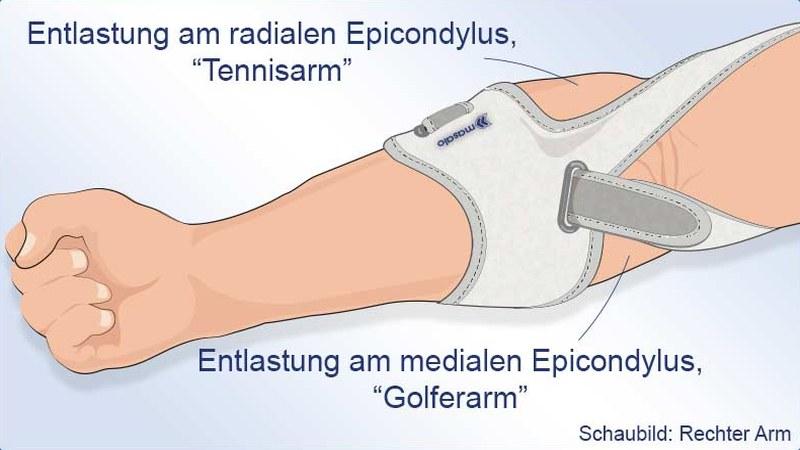
Tennis elbow affects the outer side of the elbow, golfer's elbow the inner side. You can read more about causes and symptoms in our tennis elbow guide.
How does the counter-traction principle work?
Targeting the pulling forces
The cuff does not press on the painful spot. Instead, it targets the pulling forces that act there.
Creating counter-traction
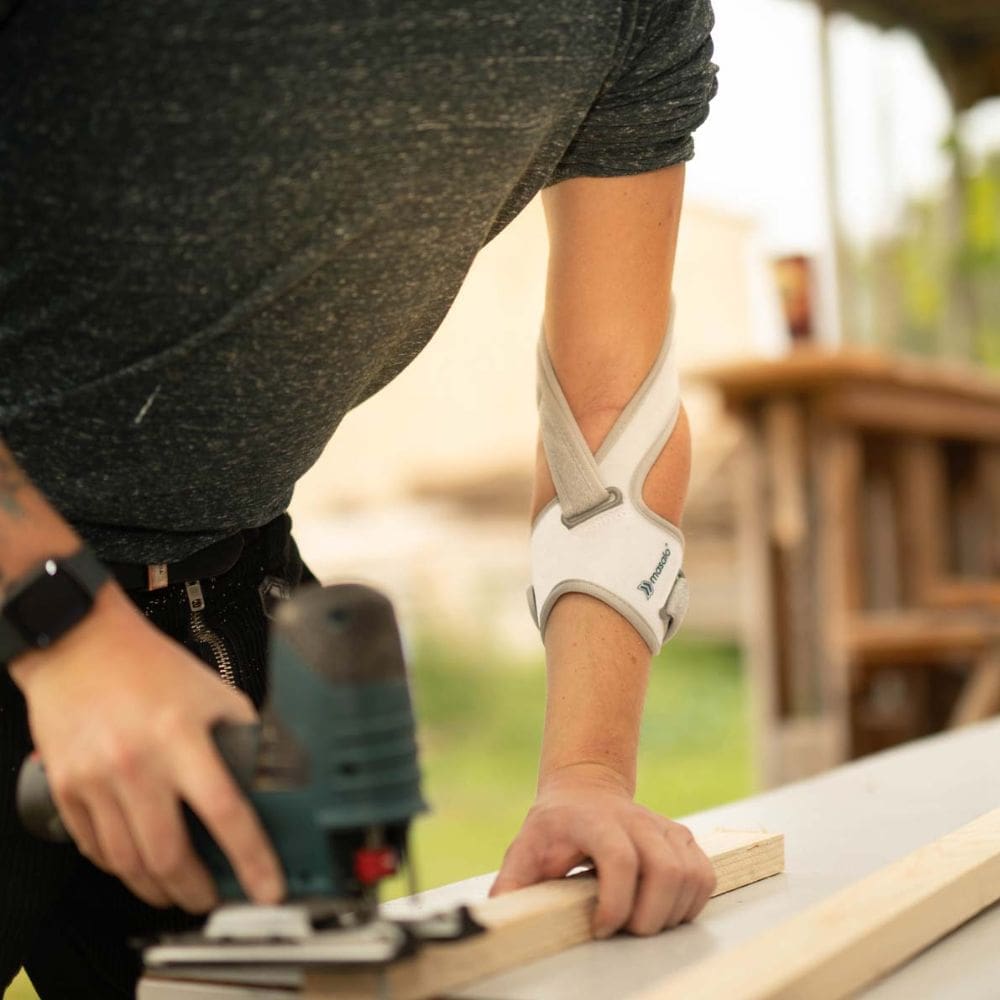
When you straighten your arm or put strain on it, the upper-arm strap gently pulls the forearm cuff, together with the muscles, towards the elbow. This counter-traction is intended to relieve the tendon attachments.
Redirecting the forces
The pulling forces are redirected to the upper-arm strap – away from the irritated area. You can keep using your arm as normal.
What happens when you straighten and bend your arm?
With the cuff on, straightening your arm takes a little force – and that is exactly the moment the counter-traction comes into play. With every movement, the forearm muscles are also gently stretched towards the elbow, loosened and massaged.
If you bend your arm sharply, the pull eases off by itself, so circulation remains unimpeded. You decide how early the counter-traction sets in via the upper-arm strap: the tighter it is, the greater the relief.
Why does the cuff work without compression?
Many conventional tennis elbow supports and clasps press on the forearm muscles. The Masalo Cuff does without this pressure and can therefore be worn for long periods, including at night. Many people know the idea of absorbing pulling forces through counter-traction from taping – the cuff implements it mechanically and can be readjusted at any time.
Both principles compared objectively: Epicondylitis clasp or support?
Only effective when fitted correctly
The principle only works if the cuff is positioned correctly. A good sign: when you straighten your arm, a small bulge forms between the forearm cuff and the elbow. Our fitting guide shows you how to put the cuff on. Which part does what is explained on the page about how the Masalo Cuff is constructed.
You can find out whether the cuff may be an option for your symptoms under Who is the Masalo Cuff suitable for?