Guide
Tennis Elbow: Causes, Symptoms, Treatment and Duration
Tennis elbow is an overload of the tendon attachments on the outer side of the elbow. Typical signs are pain when gripping, lifting and turning – usually triggered by repetitive movements in everyday life, at work or during sport.
5 min readUpdated on November 10, 2026

Contents
Key points at a glance
- It affects the outer tendon attachment at the elbow; the medical term is lateral epicondylitis.
- It is triggered by repeated or unaccustomed strain – tennis is just one of many possible causes.
- Typical signs: pain when gripping, lifting and shaking hands, and reduced grip strength.
- It is usually treated without surgery: reducing strain, physiotherapy, medical aids.
- It can last anywhere from a few weeks to many months.
What is tennis elbow?
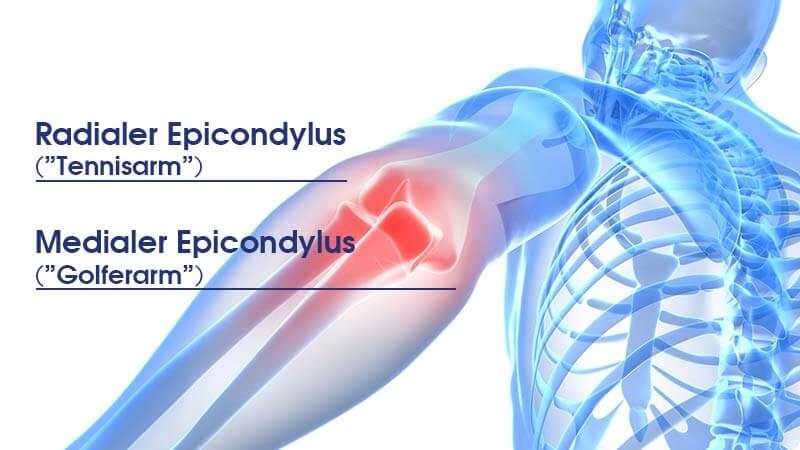
With tennis elbow – also referred to as lateral elbow pain – the tendon attachment on the outer side of the elbow is overloaded and irritated. This is where the muscles that extend the wrist and fingers originate, at the outer bony prominence (epicondyle). The medical term is epicondylitis lateralis, or lateral epicondylitis. Because there is often irritation rather than inflammation, the terms epicondylopathy and epicondylosis are also used.
The name is misleading: many people affected have never held a tennis racket. The counterpart on the inner side of the elbow is golfer's elbow.
How does tennis elbow develop?
Every movement of the hand and fingers pulls at the tendon attachment via the forearm muscles. If it is put under strain too often, too one-sidedly or with unaccustomed force, tiny injuries known as micro-tears develop. The tissue becomes irritated and sensitive to pressure and strain.
Tendons have only a limited blood supply and recover slowly; their elasticity also decreases with age. If the irritated attachment is put under strain again and again in everyday life, a cycle of strain and irritation can develop. Typical triggers include:
- Unaccustomed exertion such as moving house, a big spring clean or renovation work
- Tools such as screwdrivers, hammers, saws or vibrating machines
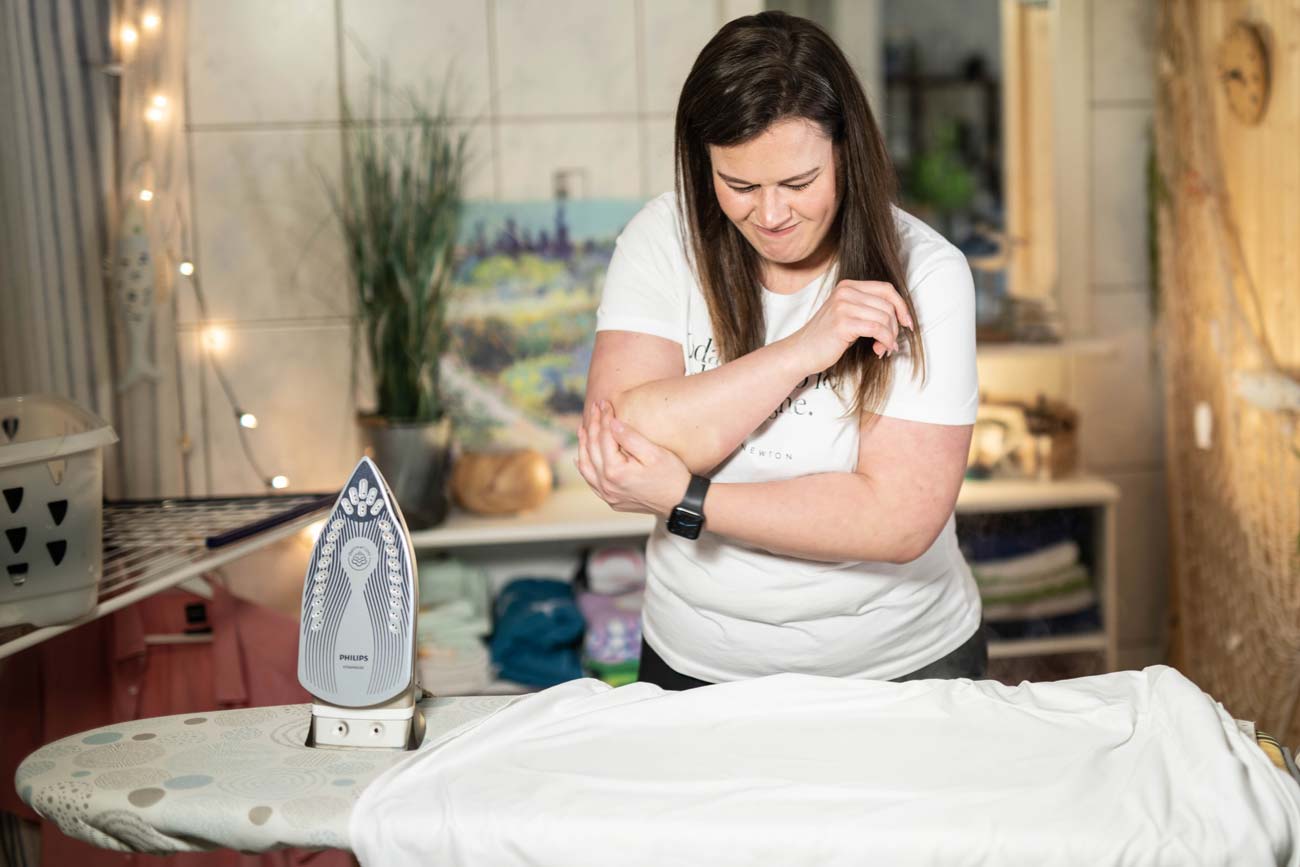
- House and garden: ironing, knitting, trimming hedges, shovelling snow
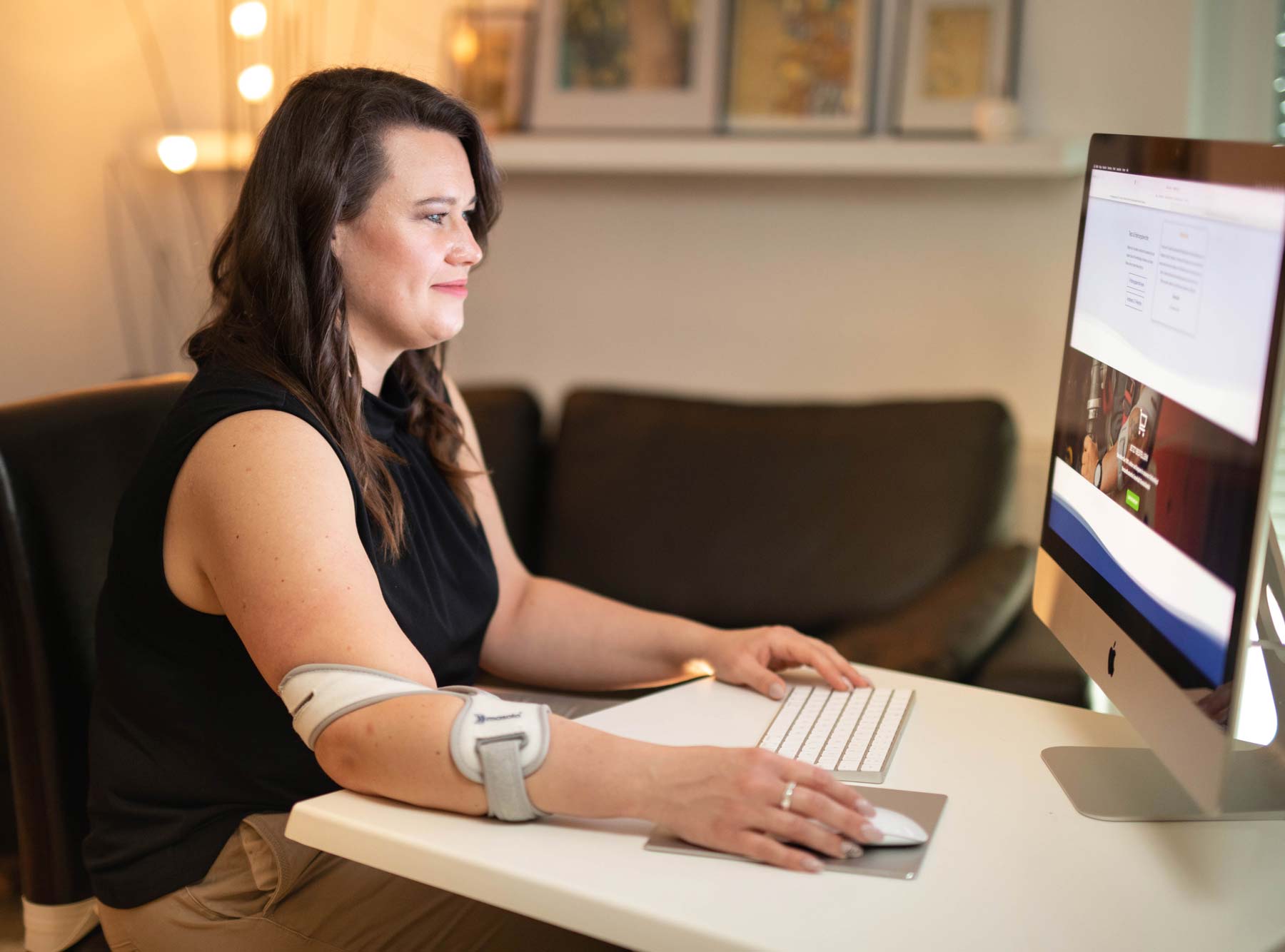
- Screen work with a mouse and keyboard for many hours – find out more in the article on mouse arm
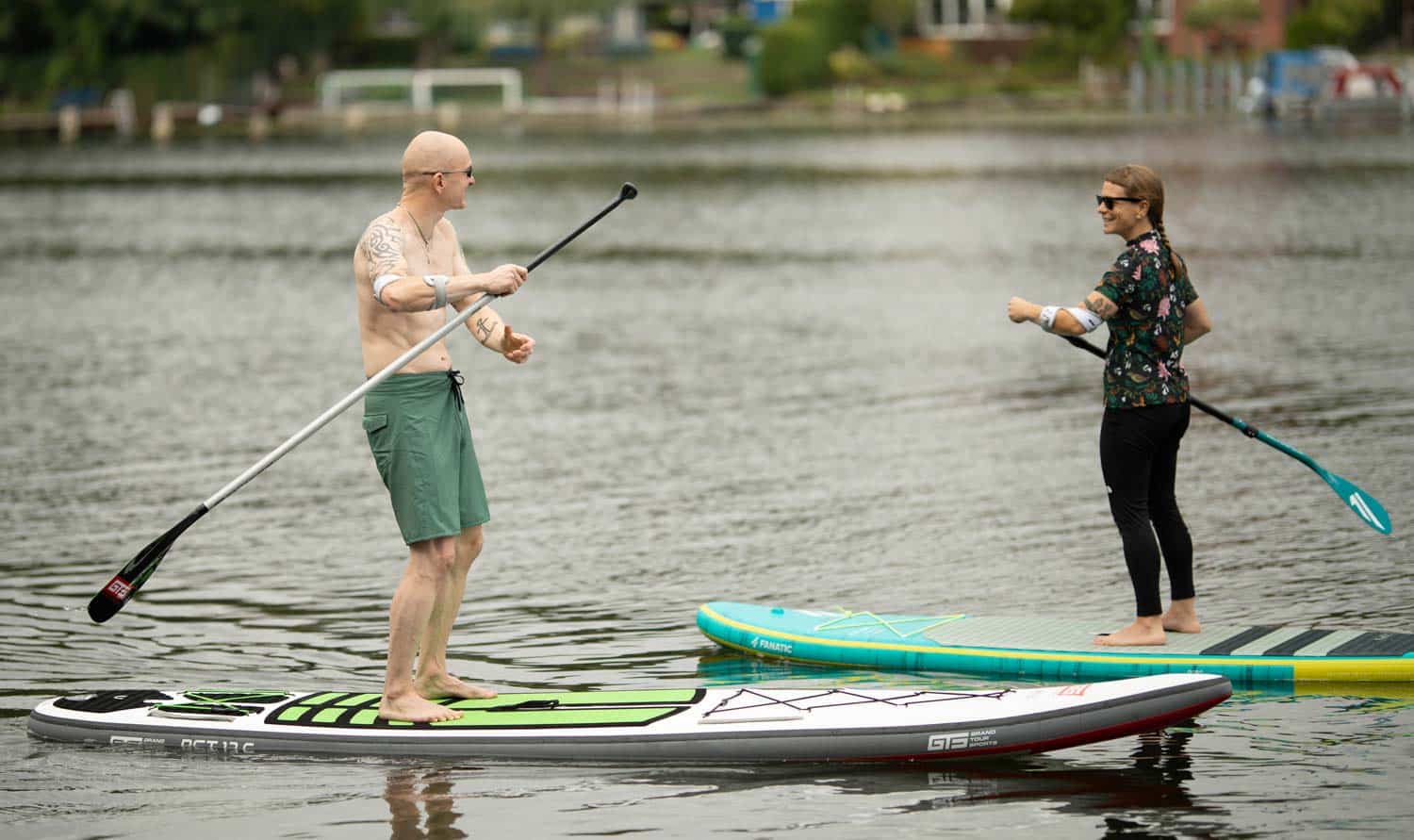
- Sport involving a racket, weights or a strong grip
People who use their hands forcefully or very repetitively at work are often affected – in skilled trades, in warehousing and assembly, in catering or in the office. Tennis elbow occurs most frequently in middle adulthood.
Typical symptoms
Tennis elbow often starts gradually. At first there is only a dragging sensation after certain activities; later, the pain also occurs with small hand movements or at rest. Typical signs are:
- Pain on the outer side of the elbow that can radiate into the forearm
- Discomfort when gripping, lifting and turning – for example when lifting a cup, opening a jar or shaking hands
- Tenderness at the outer bony prominence
- Reduced grip strength: objects feel heavier than usual
- Pain at night or in the morning after getting up
How is tennis elbow treated?
As a rule, tennis elbow is initially treated conservatively, i.e. without surgery. Which measures make sense in your individual case is best clarified with a doctor. Frequently recommended measures include:
- Adjusting the load: reducing the activities that trigger the pain, without completely immobilising the arm
- Cooling for acute, irritated symptoms
- Physiotherapy with guided exercises and manual techniques
- Ergonomics and technique: adapting tools, grips, workstation or stroke technique
- Supports and orthoses intended to relieve the tendon attachments
- Treatments prescribed by a doctor such as medication, injections or shockwave therapy
Surgery is only considered if the symptoms persist for a long time despite consistent conservative treatment. You can read what you can do yourself under What helps with tennis elbow?
How long does tennis elbow last?
There is no general answer. For some people, the symptoms subside after a few weeks; for others, they drag on for many months and become chronic.
Relapses are also possible – especially if the previous level of strain is resumed in full too quickly. Patience, consistent relief of strain and a gradual return to your usual level of activity are therefore important.
When should you see a doctor?
Elbow pain can have various causes. Only a doctor can make a reliable diagnosis, for example at your GP's or an orthopaedic practice. Have your symptoms checked if:
- the pain persists for several weeks or gets worse despite rest
- the symptoms started after a fall, a blow or an accident
- the elbow is swollen, red or warm, or you have a fever
- you can no longer fully bend or straighten your arm
- you experience tingling, numbness or loss of strength in your hand or fingers
- the pain is severe even at rest or radiates into the shoulder
Counter-traction instead of pressure: the Masalo Cuff MED
Conventional epicondylitis clasps and supports usually work with compression on the muscles. The Masalo Cuff MED takes a different approach: it was developed to counter the pulling forces of the forearm muscles with counter-traction. To do this, a forearm cuff and an upper-arm strap redirect part of the pulling forces to the upper arm – this is intended to relieve the irritated area at the elbow while the arm remains mobile.
Because it works without compression, the cuff can also be worn for longer periods and at night. The page How it works explains exactly how this is done. The cuff complements medical assessment and treatment but does not replace them.